Bringing a medical device from an early idea to a commercially viable product is rarely a straight line.
Every stage introduces new questions. Is the underlying technology technically feasible? Can it be manufactured consistently? Have user needs been properly defined? Are the development pathway, regulatory requirements and production strategy aligned? And, perhaps most importantly, are the right decisions being made early enough to protect the time, funding and intellectual property already invested in the concept?
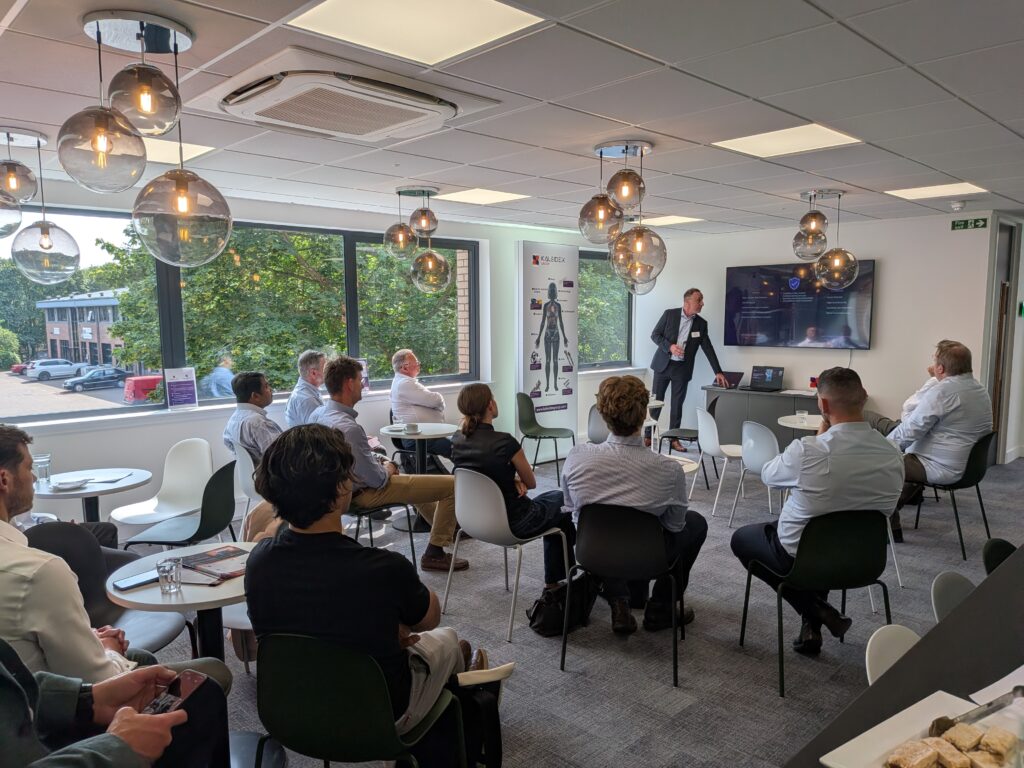
These questions shaped the first in a new series of networking events for medtech innovators and investors, hosted by Duncan Keeble and Gavin Meadows at OxDevice’s new facility at Monarch House in Abingdon on Thursday 9 July.
Under the theme Protecting Investment in Medical Innovation, the event brought together people working across medical-device development, investment and commercialisation to explore how better planning, stronger partnerships and joined-up capability can help promising technologies progress more confidently.
Protecting more than the original idea
In medtech, investment is not only financial. It includes the time spent understanding a clinical problem, the knowledge embedded in an early design, the intellectual property behind a new mechanism and the effort required to prove that a concept can work.
However, even a strong idea can lose momentum when development becomes fragmented. A design may progress without enough consideration of manufacturing. A prototype may demonstrate the principle but prove difficult to reproduce. Regulatory, usability or quality requirements may be addressed too late. Each disconnect can create delays, additional costs and unnecessary rework.
Protecting investment therefore means more than safeguarding a patent or controlling a project budget. It means creating the right development foundations and connecting the different stages of the journey before avoidable problems become embedded in the product.
That was central to Duncan Keeble’s presentation, which explored the medical-device development pathway and the strategies innovators can use to avoid common pitfalls. He also outlined how OxDevice can support projects as a development partner at different stages, rather than only becoming involved once a design is considered complete.
This early involvement can be particularly valuable. Decisions made during concept development may eventually affect tooling, testing, assembly, cleanroom requirements, packaging and production at scale. Looking at those issues together gives development teams a clearer view of what lies ahead and helps prevent one stage of the process from creating difficulties for the next.
An end-to-end view of the development journey
Gavin Meadows introduced attendees to Kaleidex Group and its broader end-to-end capabilities, showing how specialist expertise can be connected from design and development through to manufacturing, cleanroom production and final packing.
This joined-up approach reflects an important reality of medical-device innovation: no individual stage exists in isolation.
A design must ultimately be manufacturable. A manufacturing process must be capable of delivering the required quality and repeatability. The device may need to move into a controlled cleanroom environment for assembly or packing. Documentation, inspection and traceability need to support the product throughout.
When those capabilities are fragmented across multiple suppliers, innovators can find themselves managing numerous handovers and resolving gaps between different disciplines. An end-to-end partner can help provide greater continuity, giving both medical-device companies and their investors a clearer understanding of the route from concept to market.
For investors, that visibility can be especially important. Technical progress alone does not remove commercial risk. Confidence grows when there is a credible pathway showing how the product can move through development, verification, transfer and manufacture.
Innovation in orthopaedic revision surgery
The event also featured two guest speakers working on distinctive medical technologies. Iestyn Foster shared the work being undertaken by Amotio to transform orthopaedic revision surgery and the removal of bone cement.
Revision procedures can present substantial technical challenges, and innovations that improve how clinicians approach them have the potential to make an important contribution. Amotio’s work provided attendees with a practical example of the type of focused clinical problem that can drive medical-device innovation.
It also reinforced the need to understand the whole development landscape around a technology. Addressing a clinical challenge is the starting point. Turning the proposed solution into a device that can be tested, manufactured and adopted requires collaboration across multiple technical and commercial disciplines.
Improving needle imaging and placement
Ian Quirk of Active Needle Technology introduced the company’s proprietary medical-device platform, developed to support the accurate imaging and placement of needles in vivo.
Accurate needle placement is relevant across a wide variety of clinical procedures, making technologies that improve visibility and control especially interesting.
As with many medical innovations, the value of the concept depends on more than the technology in isolation. The device must integrate into clinical workflows, perform consistently and be supported by an appropriate development and manufacturing strategy.
Hearing directly from companies working through these challenges helped bring the event’s central theme to life. Protecting investment is not an abstract exercise. It is about helping good ideas survive the transition from technical promise to practical application.
Inside the new Monarch House facility
Following the presentations, attendees divided into two groups for tours of the new OxDevice facility at Monarch House. The visit included the research and development areas, the new cleanroom and the nitinol laboratory, with the full team now working together at the new Abingdon site.
The tours gave attendees an opportunity to see the facilities and capabilities behind the discussions. They also demonstrated the benefit of bringing different areas of expertise together within one environment.
For innovators, seeing how development, specialist materials knowledge and controlled production can connect often helps make the later stages of the journey feel more tangible. It moves the conversation beyond what a concept could become and towards how it can realistically get there.
The event concluded with drinks, canapés and networking, creating time for further conversations between innovators, investors and the teams from OxDevice and Kaleidex Group.
Those informal discussions are a valuable part of events such as this. Medical-device development depends heavily on specialist knowledge, but it also depends on relationships. Bringing different perspectives into the same room can reveal new opportunities, identify shared challenges and help innovators find the expertise they need earlier.
Continuing the conversation
This event was the first in a planned series for medtech innovators and investors. The next session is scheduled for 3.30pm on 22 October 2026, providing another opportunity to visit OxDevice, meet people from across the sector and continue the conversation around developing and commercialising medical innovation.
The central message from the first event was clear. Protecting investment in medical innovation does not mean slowing progress. It means giving innovation a stronger route forward.
By challenging assumptions early, avoiding preventable development pitfalls and connecting design, development and manufacturing expertise, innovators can reduce risk without losing momentum.
Because a promising medical technology deserves more than a strong beginning. It needs the right support to become a successful reality.
Interested in joining us for the next event at 3.30pm on 22 October 2026? To register your interest or request more information, please email Alice at alice.nuttall@kaleidexgroup.com